Tag: Servisource education support

  • Inclusive Education and The Best Practices for Supporting Students with Disabilities in the Classroom

    Inclusive Education and The Best Practices for Supporting Students with Disabilities in the Classroom

    Inclusive Education and The Best Practices for Supporting Students with Disabilities in the Classroom
    Inclusive Education and The Best Practices for Supporting Students with Disabilities in the Classroom

    Inclusive Education and The Best Practices for Supporting Students with Disabilities in the Classroom

    Inclusive education is an educational approach that aims to provide all students, regardless of their abilities or disabilities, with equal opportunities to learn and participate in a mainstream setting. Its goal is to create an environment where diversity is celebrated and every student feels valued and supported. We take a look at inclusive education and the best practices for supporting students with disabilities in the classroom and how it promotes their integration into a regular classroom environment.

    Education Support with Servisource

    • Servisource has the right people to support students, understanding their needs and matching students with an Educational Support Worker (ESW) who has similar interests and is a good personality match so they are comfortable with their ESW.
    • This leads to long lasting working relationships and an ability to anticipate needs, creating a collaborative and inclusive environment for all.

    Contact Form

    Contact Form

    This field is for validation purposes and should be left unchanged.

    Your Personal Information

    Your Name(Required)
    Your Email Address(Required)
    Accepted file types: pdf, doc, docx, Max. file size: 25 MB.
    Upload your resume in .pdf, .doc or .docx format
    Where did you hear about us?(Required)

    The Key Principles of Inclusive Education:

    • Equality and Non-Discrimination: ensures that all students are treated equally and there are no discriminations against their abilities, race, gender, or any other characteristics.
    • Access to Quality Education: this incorporates appropriate support, accommodations, and resources to meet the diverse needs of students.
    • Individualised Learning: this aspect recognises that each student is unique and aims to tailor teaching methods, materials, and assessments to cater to individual strengths and challenges.
    • Collaboration and Teamwork: inclusive classrooms involve collaboration between teachers, special educators and support staff, creating a supportive learning environment.
    • Positive School Climate: they promote a culture of acceptance, understanding, and mutual respect, creating a positive school climate.
    • Social Integration: it aims to foster friendships among all students, promoting a sense of belonging for everyone.

    According to Research Outreach, it is now estimated that over a quarter of all students in Ireland’s mainstream schools have additional learning needs and/or disabilities.

    Inclusive Education and The Best Practices for Supporting Students with Disabilities in the Classroom

    Best Practices in the Classroom:

    As educators, there is a responsibility to ensure that all students have equal access to education and feel supported in the classroom. For students with disabilities, this often means implementing effective strategies to accommodate their unique needs. Providing a welcoming and inclusive classroom environment is key, and this can be achieved through the following simple actions:

    • Personalised Education Plans: these plans outline specific learning goals, accommodations, and support services tailored to the student’s needs.
    • Teacher Training and Professional Development: ongoing training to teachers and school staff to equip them with the necessary skills and knowledge to effectively support students with disabilities.
    • Collaborative Teaching: promoting co-teaching and collaboration between general education teachers and special education teachers to ensure seamless support for all students.
    • Assistive Technology: integrate assistive technologies (speech recognition software and modified keyboards) into the classroom to support students with disabilities in their learning and communication.
    • Accessible Classroom Environment: ensure that the physical classroom environment is accessible to all students, including those with mobility challenges.
    • Regular Assessment and Progress Monitoring: monitor students’ progress regularly and adjust instructional strategies as needed to support their learning.

    Servisource Tip

    Involving parents and the community in the inclusive education process by seeking their input and collaboration, creates a supportive network for students with disabilities.

    Servisource and education support

    By implementing the best practices, it creates an atmosphere of acceptance, compassion, and understanding towards those with extra needs. In doing so, all students will come together to share knowledge, resources, and experiences. This kind of inclusive culture benefits everyone in class as everyone is encouraged to support one another’s growth and development. It is the job of educators to ensure that all students are provided with the opportunity to succeed regardless of any learning difficulties they may face.

    Want to know how our Education Support services can assist you?

  • The Benefits and Best Practices of Academic Coaching for Students with Disabilities

    The Benefits and Best Practices of Academic Coaching for Students with Disabilities

    5 tips on finding the right homecare provider
    The Benefits and Best Practices of Academic Coaching for Students with Disabilities

    The Benefits and Best Practices of Academic Coaching for Students with Disabilities

    Academic coaching for students with disabilities can be a powerful tool to help them develop better study habits, organisation skills, and relationships, as well as navigating academic challenges. It can come in the form of individualised support and guidance from an Education Support Worker tailored to the student’s specific needs. This empowers individuals to achieve their full potential in education and become equipped with essential coping strategies for life. The benefits and best practices of academic coaching for students with disabilities outlined below gives an insight into just how important it is for academic growth.

    Did You Know?

    Research has identified that the number of students in higher education engaging with disability services has risen by over 268% (4,853 in 08/09 to 17,866 in 20/21).

    The Benefits and Best Practices of Academic Coaching for Students with Disabilities

    Personalised Guidance

    One of the primary benefits of academic coaching for students with disabilities is the provision of personalised support tailored to their specific needs. Education Support Workers work closely with students to identify their strengths, weaknesses, and learning styles. They then develop customised strategies and approaches to help students overcome challenges and to maximise their academic potential. This personalised support ensures that students receive the correct attention and guidance necessary to succeed.

    Assessments and evaluations to understand the unique needs of each student with disabilities may be needed as well as collaboration with other professionals, such as special educators or therapists, in order to gather comprehensive information. The support worker can then use this information to create an individualised coaching plan that addresses the specific challenges and goals of the student.

    Developes Strategies

    Coaching not only focuses on academic content but also on developing essential skills and fostering self-advocacy. Support workers help students enhance their study, time management and organisation skills. By equipping students with these skills, it empowers them to take control of their learning process and advocate for their needs effectively. This cultivates independence and resilience, enabling students to overcome obstacles and succeed academically.

    Skill-building activities should be incorporated into their coaching sessions. Support workers should encourage students to reflect on their progress, set realistic goals, and practice self-advocacy by teaching them how to communicate their needs to teachers and support staff.

    Boosts Self-Confidence

    Many students face unique challenges, including self-doubt, anxiety, or frustration due to their learning differences. Academic coaching for students with disabilities extends beyond academic aspects and encompasses emotional support. Support workers serve as mentors and allies, offering encouragement, empathy, and a safe space for students to express their concerns. By providing emotional support, academic coaches help students build confidence, resilience, and a positive mindset, which are crucial for academic success.

    A nurturing and supportive relationship should be established with students based on trust and empathy. They should actively listen to students’ concerns, validate their experiences, and provide constructive feedback. Support workers can also help students develop self-care strategies to manage stress and cultivate a growth mindset, such as dedicating time to themselves, and carrying out exercise and hobbies.

    At Servisource, our Educational Support Workers support students with disabilities who may require an enhanced level of support to enrich their learning experience and support their participation in their chosen course of study. Examples of Educational Support Workers include: Personal Assistants, Academic Personal Assistants and Note-takers. Duties include:

    • Assist in facilitating the student’s attendance at all necessary lectures, tutorials, labs and other academic contact hours.
    • Assist the student with mobility and orientation on campus.
    • Assist the student with carrying personal belongings such as books and folders.
    • Typed, accurate and detailed notes for all required lectures, tutorials, labs and academic contact hours. 

    Education Support at Servisource

    • Our highly experienced team work closely with our Educational Support Workers ensuring the delivery of an elite service to students.
    • We understand your world; we speak your language. We have an understanding of the educational needs of students with additional needs.
    • We can match the right people with the right skills and knowledge with your student every time.

    Contact Form

    Contact Form

    This field is for validation purposes and should be left unchanged.

    Your Personal Information

    Your Name(Required)
    Your Email Address(Required)
    Accepted file types: pdf, doc, docx, Max. file size: 25 MB.
    Upload your resume in .pdf, .doc or .docx format
    Where did you hear about us?(Required)

    Academic coaching offers personalised support, skill development, self-advocacy training, emotional support, and confidence building. By following best practices, such as the above, they can effectively assist students with disabilities in achieving their academic goals and overall success in life. Setting them up to thrive now while preparing them for a promising future.

    Want to know how our Education Support Services can assist you?

  • A Guide for Teachers and Educators for Sign Language Interpretation in Education

    A Guide for Teachers and Educators for Sign Language Interpretation in Education

    5 tips on finding the right homecare provider
    A Guide for Teachers and Educators for Sign Language Interpretation in Education

    A Guide for Teachers and Educators for Sign Language Interpretation in Education

    Sign language is a visual language that uses hand gestures, facial expressions, and body language to communicate. Educators and teachers have recognised the importance of learning it as a means to improve communication with students who are hard of hearing or deaf. They know the importance of accurately interpreting students’ needs during class instruction. We have created a guide for teachers and educators for sign language interpretation in education which will be helpful whether you are already familiar with it or completely new to it.

    By implementing this interpretation into classrooms for deaf students, they can have a better understanding of their students’ unique abilities as well as ensure that they all get equal access to an education.

    Did you know?

    It is estimated that 5,000 people communicate in Irish Sign Language (ISL) as their primary language.

    A Guide for Teachers and Educators for Sign Language Interpretation in Education

    Stage 1: Learn the basics

    Understanding the basics of sign language goes a long way in creating an inclusive and accommodating learning environment for students who may be deaf or hard of hearing. Taking the time to familiarise oneself with the basics of its vocabulary, grammar and syntax, can make a significant impact on the educational journey of a student. Some basic signs include the alphabet, numbers, and common phrases such as “hello” and “goodbye.” By learning these simple gestures, educators can ensure that they are better equipped to communicate with their students, making sure that every student can learn to thrive.

    Stage 2: Understand the community

    It is vital to understand how to communicate effectively with deaf students and to immerse yourself in their culture. Learning how to sign means embracing the unique identity and experiences of the deaf community. Studying the history, beliefs, and values of the deaf culture is a crucial aspect of interpreting it effectively in education. As an educator, it is your responsibility to provide a safe and inclusive learning environment for all students, regardless of their hearing ability.

    Stage 3: Assess individual needs

    One of the most important responsibilities is to ensure that every student is given an equal opportunity to learn. This is especially true when it comes to students who are deaf or hard of hearing. That’s why it’s crucial to understand the specifics behind sign language interpretation in education, and how to assess individual needs. From ensuring that all learning materials are presented in a way that is accessible, to providing appropriate classroom support such as note takers in the classroom.

    Stage 4: Correct set-up

    As we become more aware of the diversity in our classrooms, it is important for educators and teachers to have the knowledge and resources available to effectively communicate with all students. Establishing a correct set up in a classroom setting is important to ensure equal access to education for students with hearing impairments. Education environments should have a qualified interpreter as well as the correct lighting and positioning for optimal communication and should keep the classroom door closed to keep noise out, which can otherwise be distracting.

    Stage 5: Pace and clarity

    To ensure effective interpretation in education, it is good to consider the pace and clarity with which the information is being conveyed. Speak clearly, using appropriate facial expressions, and avoid rushing through content to help to create an effective learning experience. Educators should understand the nuances and body language involved in this visual language and learn to acknowledge when students need them to slow down.

    Stage 6: Visual supports

    Visual supports are a vital tool to ensure the correct set up in a classroom setting. These visual aids can be effective in enhancing the learning experience of deaf or hard-of-hearing students, as well as facilitating communication between peers and teachers. Try to find captioned videos or interpreted options. From posters and charts outlining the basics to videos demonstrating proper technique, visual aids are a valuable resource for any educator.

    Stage 7: Encourage interaction

    Teachers can encourage interaction by creating group activities, asking open-ended questions, and promoting peer-to-peer learning. These strategies enable students to learn from each other and develop their communication skills, benefiting everyone in the classroom. Whether it’s through interactive games or group activities, interactive learning helps to ensure that all students, regardless of their hearing ability, can feel seen, heard and valued.

    Stage 8: Seek continuous improvement

    Seeking continuous improvement is crucial to making sign language accessible to every student who needs it. Whether it is through workshops, training sessions, or online resources, teachers need to be equipped with the correct knowledge and tools.

    The Register for Irish Sign Language Interpreters supports professional Irish Sign Language interpreters to meet and maintain standards. It also promotes social inclusion of Irish Sign Language users by supporting the use of registered interpreters including access to public bodies. Through the commitment of educators to continuously improve their interpretation skills, it is a testament to their devotion to providing inclusive and meaningful learning environments for all of their students.

    A Guide for Teachers and Educators for Sign Language Interpretation in Education

    By following these guidelines, educators and teachers can break down barriers and create an inclusive environment for all students with hearing impairments. By taking small steps such as using visual aids, providing classroom accommodations and engaging in active listening, they can improve communication and ensure a safe space for deaf students.

    Education is an ever-evolving process, therefore, it is up to the education systems to take the initiative and develop policies that allow for better accessibility for all learners. Through compassion and commitment, much progress can be accomplished in advancing overall learning outcomes.

    At Servisource, our dedicated team supports your school’s needs. We place and match the most suitable Educational Support Workers (ESWs) to meet the needs of the students.

    Contact Form

    Contact Form

    This field is for validation purposes and should be left unchanged.

    Your Personal Information

    Your Name(Required)
    Your Email Address(Required)
    Accepted file types: pdf, doc, docx, Max. file size: 25 MB.
    Upload your resume in .pdf, .doc or .docx format
    Where did you hear about us?(Required)

    Want to know how our Education Support services can assist you?

  • Dyslexia Support: Strategies and Resources for Students and Teachers

    Dyslexia Support: Strategies and Resources for Students and Teachers

    5 tips on finding the right homecare provider
    Students in class

    Dyslexia Support: Strategies and Resources for Students and Teachers

    Dyslexia is a neurological condition that affects the way the brain processes language. It makes it difficult for individuals to recognise and decode words which affects a person’s ability to read, write, and spell. People with dyslexia often have difficulty with the ability to break down words into their individual sounds. This can make it challenging for them to understand the relationship between sounds and letters, and to recognise and spell words accurately. It is a lifelong condition that can be managed with appropriate support and intervention.

    As dyslexia affects so much of the way in which students learn, it is important for both students and teachers to understand the condition properly. This gives students an equal opportunity within the educational system. There are a wide range of strategies and resources available that help provide support. We will look at some of these strategies and resources.

    Multi-sensory teaching methods

    Dyslexia Support: Strategies and Resources for Students and Teachers

    Multi-sensory teaching methods are becoming increasingly popular in today’s classroom environment. It allows dyslexic students to better comprehend and retain information resulting in increased student achievement. When more senses are used, the more effective the learning experience will be. From a teacher’s perspective, multi-sensory teaching methods offer a range of options that make lessons fun and interactive while still teaching.

    Lessons involve using visual (watching and seeing), aural (listening and hearing ), olfactory and gustatory (smell and taste), tactile (sense to touch) and kinaesthetic senses (the position and movement of the body). Students will greatly benefit from using all of these senses.

    Examples of these teaching methods include:

    • Visual techniques: Paintings, posters and videos.
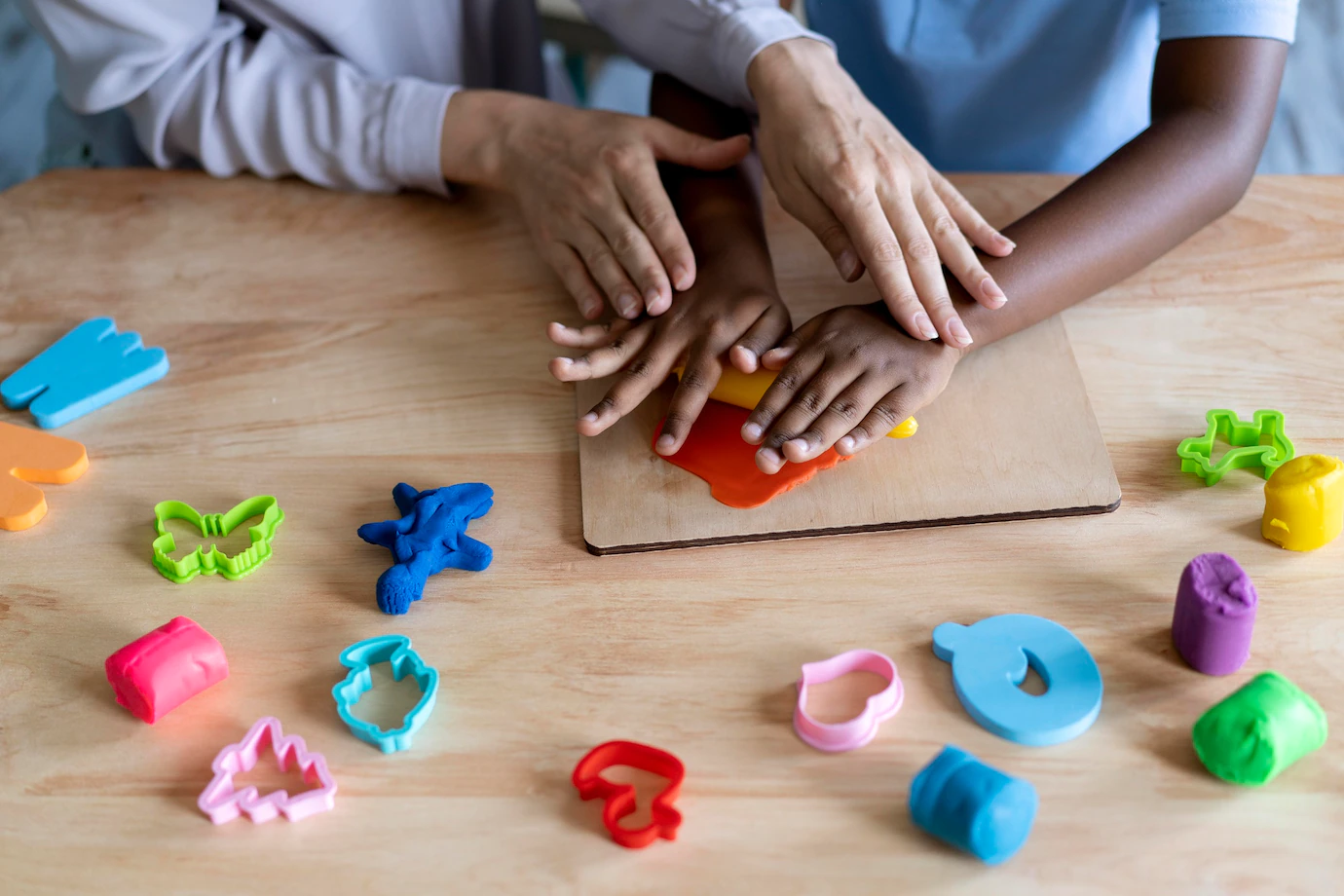
    • Playing with different artistic mediums such as clay.
    • Using gestures to make phonemes: The basic unit of a word sound is a phoneme. A list of gestures are used to represent the phonemes.
    Student and teacher Dyslexia Support: Strategies and Resources for Students and Teachers

    Advantages of multi-sensory teaching methods are:

    • Reduces stress by allowing students to learn in artistic, fun ways.
    • Offers flexibility through videos that can be easily accessed online and viewed at home.
    • Improves retention using multiple senses allowing them to make deeper connections with their learning, making it easier to recall later.
    • Increases their motivation and engagement through the excitement of creative teaching methods.

    Did You Know?

    450,000 people in Ireland have dyslexia (10% of the population) which means 3 children in every classroom have dyslexia.

    Student reading Dyslexia Support: Strategies and Resources for Students and Teachers

    Assistive technology

    Assistive technology is a powerful tool for students with dyslexia, allowing them to access and process information more easily. Teachers can adapt lessons or create assignments based on specific tools, providing a more personalised learning experience for each student.

    Examples of assistive technology are:

    • Optical Character Recognition (OCR) Software.
    • Word Prediction Software.
    • Mind Mapping Software.

    Optical Character Recognition (OCR) Software: This is technology that transforms numbers, letters, and punctuation from written documents into an electronic device.
    Word Prediction Software: This improves typing speed and accuracy by “auto-completing” words that are typed.
    Mind Mapping Software: This is a learning and organisational tool. It allows users to create maps and diagrams. Useful for note-taking and problem-solving. It also helps with the outlining of projects and presentations.

    Advantages of assistive technology are:

    • Proven to improve written expression, fluency, and comprehension by utilizing speech-to-text software.
    • Teachers and students have an opportunity to make learning accessible to all through digital versions of textbooks and audio/video recordings of lectures.
    • It sets dyslexic students up for long-term success in the classroom by making learning easier.
    • Improves students’ self-esteem and gives them a sense of independence. Allowing them to work on their own.

    Create a supportive environment

    Teaching students with dyslexia requires a supportive learning environment that gives them the best opportunity to succeed. Teachers need to understand their students’ emotional needs and look beyond their academic performance. Instead, they should focus on the skills and attributes their students have in order to reach their full potential. Having patience and being empathetic to students will allow them to progress with their school work and will help them feel comfortable in the classroom.

    Teachers can create this supportive environment by:

    • Offering one on one support, allowing shy students to become more comfortable with discussing any issues they may be having.
    • Allow extra time for students to complete work and activities, this way they don’t feel too stressed and panicked.
    • Provide a variety of learning materials and resources to accommodate different learning styles.
    • Watch for signs of misunderstanding or confusion from the students and address them as soon as possible.
    • Teachers can provide written assignments that are produced in larger, heavily-spaced fonts for improved readability.

    There are many teaching resources available for teachers from the Dyslexia Association of Ireland which details guidelines for schools on how to use resources to best meet the learning needs of students with special needs.

    At Servisource, we supply highly qualified, professional, and skilled Education Support Workers to assist students with disabilities and help them gain equal access to education. 

    Our Education Support Services

    Our Education Support Workers provide support through the following ways: note taking, reading, scribing, Invigilating, speed text operating and study skills support, among others.
    We ensure the right, skilled people are available when you need them.

    education support worker and student and Dyslexia Support: Strategies and Resources for Students and Teachers

    Contact Form

    Contact Form

    This field is for validation purposes and should be left unchanged.

    Your Personal Information

    Your Name(Required)
    Your Email Address(Required)
    Accepted file types: pdf, doc, docx, Max. file size: 25 MB.
    Upload your resume in .pdf, .doc or .docx format
    Where did you hear about us?(Required)

    By using the above techniques, teachers will be able to create a supportive learning environment for students with dyslexia, enabling them to better succeed in their academic studies. It’s important for teachers to assess the needs of each student with dyslexia, as well as support each individual’s strengths and abilities.

    With sufficient support from dedicated professionals and reliable technical resources, students with dyslexia can learn how to tackle their educational challenges while still pursuing academic excellence.

    Want to know how our Education Support Services can assist you?

  • The Benefits of Using Assistive Technology for Students with Disabilities

    The Benefits of Using Assistive Technology for Students with Disabilities

    Students with disabilities and assistive technology
    Students with disabilities sitting together

    The Benefits of Using Assistive Technology for Students with Disabilities

    Assistive technology refers to any device, equipment or software that helps people with disabilities to perform tasks that might otherwise be too difficult. The benefits of using assistive technology for students with disabilities are vast. Assistive technology can play a vital role in increasing independence, enhancing communication and improving academic performance. These are just some ways in which assistive technology can benefit students.

    Increased Independence

    Through strategic implementation of assistive technology, students are able to gain key skills while maintaining their independence. It is clear that student independence through assistive technology can be very empowering. As students have access to the correct education tools, they become more independent in their learning environments and overall lives. It’s important they have access to the appropriate tools so students with special needs can maximise their own potential. This will ensure that they are happy and secure within an educational environment.

    Assistive technology can range from providing basic assistance through to items such as:

    – Talking and modified computer software.
    – Adjustable desks.
    – Powered wheelchairs.
    – Communication boards.
    – Audiology equipment.
    – Touch pads.

    The main factor is that everyone deserves a chance to live life to its fullest. Those who are provided with more individualised support are given the ability to thrive in today’s increasingly technological world.

    educational support and assistive technology and student with disability

    Servisource Education Support provides appropriately qualified and experienced Educational Support Workers (ESW) to assist individual students with disabilities. This provides them with equal access and participation during their studies in Further and Higher Education Colleges.

    Our educational support workers support students with disabilities who may require an enhanced level of help to enrich their learning experience and support their participation in their chosen course of study. Examples of this type of support may include personal assistants who would assist a student with mobility and orientation, sourcing library books, and carrying personal belongings. Note takers are also available, who record detailed and accurate notes from attending lectures, tutorials, or seminars.

    Enhanced Communication

    With advances in assistive technology, students can now receive higher quality education and support, as well as increased opportunities for communication. Examples include speech recognition software and modified keyboards. These methods enable students to write and express themselves more easily. They can also be used to help students build their reading, writing, spelling, and math skills or simply make daily tasks easier.

    Assistive technology tools can improve communication between students with disabilities and their teachers, classmates, and family members. For example, a student who is nonverbal may use an alternative communication device (AAC) to communicate with others.

    The Benefits of Using Assistive Technology for Students with Disabilities

    It allows them to communicate more naturally and effectively within the classroom environment. It gives them access to communication tools they may not have had access to in a traditional setting. Students have a variety of useful resources at their disposal that could greatly increase their learning potential in a classroom setting.

    Improved Academic Performance

    Today, students with disabilities have access to assistive technology that can help them reach their academic goals and it can greatly help students improve their organisation and focus. It can also facilitate peer relationships as students gain confidence and self-esteem by using the same educational tools as their classmates.

    Did You Know?

    The National Council for Special Education found that as many as 70% of pupils reported that their educational needs had been met by their Assistive Technology.

    The Benefits of Using Assistive Technology for Students with Disabilities

    Studies have shown that students with disabilities who use assistive technologies have improved note-taking skills. Additionally, these students have an increased ability to complete class assignments independently. These results are reflected in better academic performance overall, including test scores and grades on schoolwork. Assistive technology provides students with disabilities the resources they need to achieve success in the classroom setting, breaking down education barriers.

    For example, a student with dyslexia may use text-to-speech software to improve their reading comprehension. A visually impaired student can also enhance their education by using a braille keyboard. In this way, they have the same chance of receiving higher grades just like their peers.

    In summary, assistive technology can be a powerful tool for students with disabilities. It enables them to participate more fully in an academic and social setting, allowing them to reach their full potential.

    Contact Form

    Contact Form

    This field is for validation purposes and should be left unchanged.

    Your Personal Information

    Your Name(Required)
    Your Email Address(Required)
    Accepted file types: pdf, doc, docx, Max. file size: 25 MB.
    Upload your resume in .pdf, .doc or .docx format
    Where did you hear about us?(Required)

    Learn more about how our Education Support services can assist you.